Oklahoma Truck Dispatch
Oklahoma sits at the intersection of I-35, I-40, and I-44 — three major freight interstates that converge in Oklahoma City, making it a natural crossroads for transcontinental freight. The state's oil and gas industry drives heavy equipment and pipe freight, while Tinker Air Force Base (the largest single-site employer in Oklahoma) and American Airlines' maintenance hub add aerospace depth. Tribal enterprises contribute a growing economic force that most carriers overlook.
#5 US
Oil Production Rank
3 major
Interstate Junctions (OKC)
6
Military Bases
$15B+
Tribal Economic Output
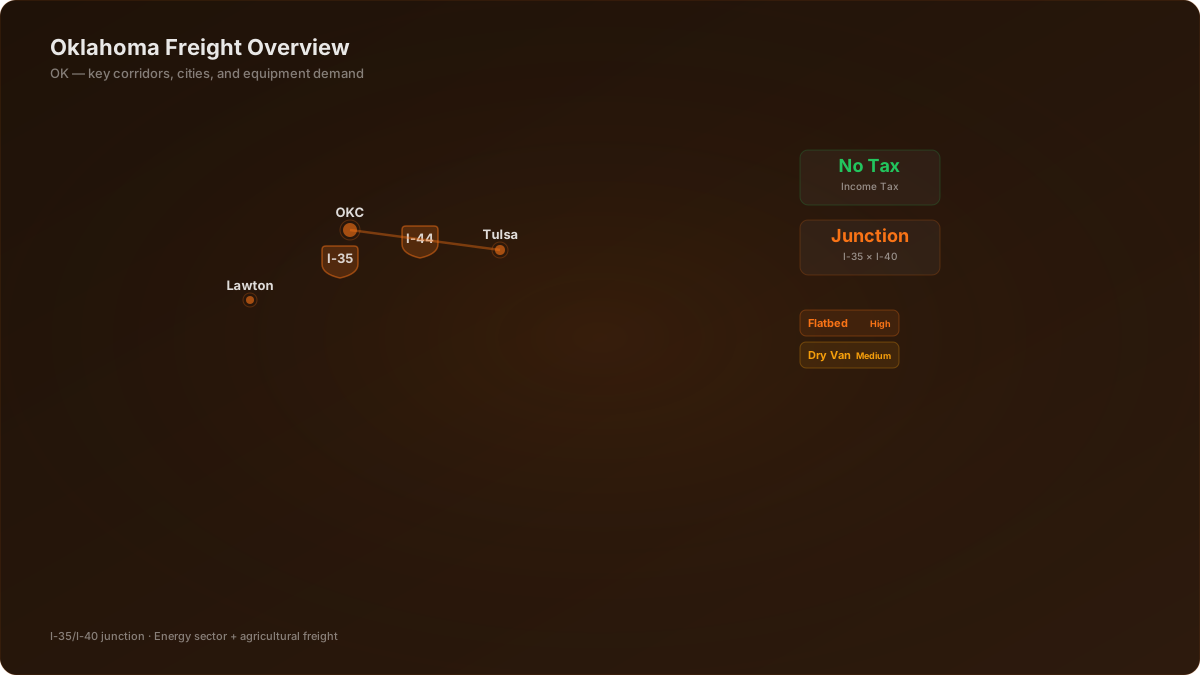
Major Freight Corridors
I-35 (Dallas → OKC → Wichita → Kansas City)
The NAFTA corridor running north-south through the heart of Oklahoma. Cross-border freight from Texas flows north to the Midwest. OKC sits at the intersection with I-40 and I-44, making it a natural freight staging point.
I-40 (Amarillo → OKC → Little Rock → Memphis)
Primary east-west transcontinental route through Oklahoma. Connects Texas/New Mexico to Arkansas and Tennessee. High dry van and flatbed traffic carrying manufactured goods, energy equipment, and agricultural products.
I-44 (Texas → OKC → Tulsa → Joplin → St. Louis)
Diagonal corridor (historic Route 66 path) connecting the energy corridor to Tulsa's refining complex and onward to the Midwest. Oil/gas equipment and refined products dominate this route.
US-69/US-75 (Tulsa → McAlester → Durant → Dallas)
Southeast Oklahoma corridor connecting Tulsa to East Texas through McAlester's munitions depot and the Choctaw Nation. Military freight and tribal enterprise logistics.
Key Industries & Freight
Equipment Demand in Oklahoma
Major Distribution Centers
- 📦Amazon OKC — fulfillment centers in Oklahoma City metro area
- 📦Walmart — DC in Choctaw (OKC) serving Oklahoma and surrounding states
- 📦Tinker AFB — largest military maintenance facility for USAF, 26,000+ employees
- 📦Cushing Oil Hub — world's most important oil storage and pricing facility
- 📦American Airlines Tulsa — 3.3M sq ft, largest commercial aircraft maintenance base in the world
Oklahoma Trucking Regulations
Oilfield Overweight Permits
Oklahoma issues special overweight permits for oilfield equipment. Certain county roads near active drilling areas have posted weight limits. Operators must obtain permits from ODOT for loads exceeding 80,000 lbs GVW. Night moves may be required for oversized oilfield equipment.
Tornado Season Operations
Oklahoma is in the heart of Tornado Alley. April through June brings severe weather that can halt operations with little notice. Carriers should monitor weather radar and have shelter plans. High winds (even without tornadoes) can make flatbed operations dangerous.
Tribal Jurisdiction
The 2020 McGirt Supreme Court ruling expanded tribal jurisdiction in eastern Oklahoma. Some freight operations on tribal land may be subject to tribal regulations, permitting, or tax structures separate from state rules. This primarily affects operations within the Cherokee, Chickasaw, and Choctaw nations.
Cities We Cover
- Oklahoma City
- Tulsa
- Norman
- Broken Arrow
- Edmond
- Lawton
Plus all surrounding metros and rural areas
Run Freight in Oklahoma?
Our Oklahoma dispatchers know every lane, every rate, and every seasonal trend.
Regional Freight Guide
🤠Texas & South Central GuideTop lanes, seasonal patterns, deadhead traps, and regulations for TX, OK, AR, LA, KS
Other Markets
Frequently Asked Questions
Oklahoma City is unique in having three major interstates (I-35, I-40, I-44) converge within its metro area. I-35 carries NAFTA freight north-south, I-40 runs coast-to-coast east-west, and I-44 connects to St. Louis and the Midwest. This geographic advantage makes OKC a natural staging and relay point for transcontinental freight, with abundant truck stops, fuel, and carrier services.
Oklahoma is the #5 oil-producing state, and Cushing is the world's most important oil pricing and storage hub. Oil freight includes pipe transport to drill sites, frac sand delivery, produced water hauling, rig moves, and refined product distribution. The SCOOP/STACK plays in central Oklahoma generate the most active oilfield trucking, with hotshot and flatbed demand spiking when oil prices rise.
Top outbound lanes: OKC to Dallas (I-35, 205mi), OKC to Kansas City (I-35, 350mi), Tulsa to St. Louis (I-44, 400mi), OKC to Amarillo (I-40, 260mi), and OKC to Little Rock (I-40, 340mi). The I-35 corridor south to Dallas and north to Kansas City provides the highest-volume, most consistent freight.
Yes. Oklahoma is the #3 state for installed wind energy capacity. Wind farms in western Oklahoma require oversized transport for tower sections, nacelles, and blades (often 200+ feet). Construction phase creates months of heavy haul demand per wind farm, followed by ongoing maintenance parts freight. The eastern Oklahoma tribal lands are also developing wind projects.
Yes. Oklahoma's position at the crossroads of I-35, I-40, and I-44 creates natural freight flow in every direction. We dispatch flatbeds, hotshots, dry vans, and all equipment types across the oil patch, military bases, tribal enterprise freight, and OKC/Tulsa distribution.
Get Dispatched in Oklahoma
Our dispatchers know the Oklahoma freight market inside and out. Tell us your equipment type and preferred lanes — we'll keep your truck loaded and profitable.