Mississippi Truck Dispatch
Mississippi surprises most carriers. Toyota's Blue Springs plant and Nissan's Canton plant brought world-class automotive manufacturing to the state, while the Mississippi River's inland ports move grain, chemicals, and containers. Mississippi is the #1 catfish-producing state by a wide margin, military installations at Stennis and Keesler add defense freight, and the furniture-making tradition of Northeast Mississippi persists. It is not a high-volume state, but freight rates often reflect that — less competition means better margins for carriers who know the market.
#1 US (55%+)
Catfish Production
5 major
Mississippi River Ports
2 (Toyota, Nissan)
Auto Assembly Plants
4
Military Bases
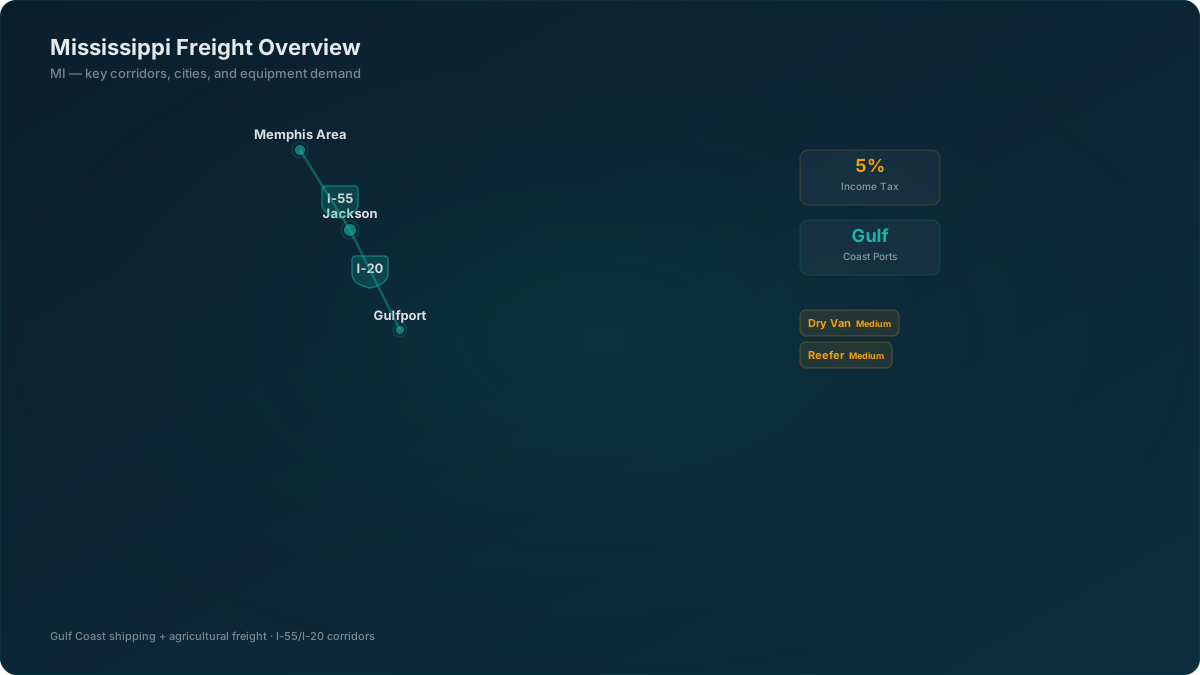
Major Freight Corridors
I-55 (Memphis → Jackson → New Orleans)
Mississippi's primary north-south corridor following the state's western edge. Connects Memphis (the logistics capital) to Jackson and the Gulf Coast. Agricultural freight, automotive parts, and consumer goods. High truck traffic density.
I-20 (Vicksburg → Jackson → Meridian → Alabama)
East-west corridor through central Mississippi connecting the Mississippi River port at Vicksburg to Jackson's distribution hub and eastward to Alabama. Nissan Canton plant sits just off I-55/I-20 junction.
I-22 (Memphis → Tupelo)
Northeast Mississippi corridor connecting the Memphis market to the Tupelo furniture and manufacturing region. Toyota Blue Springs plant and the North Mississippi furniture cluster generate the primary freight along this route.
US-49 (Jackson → Hattiesburg → Gulfport)
Central-to-Gulf corridor connecting the capital to Mississippi's coast. Military freight (Camp Shelby, Stennis Space Center, Keesler AFB) and gaming/hospitality supply (Biloxi casinos) drive this route.
Key Industries & Freight
Equipment Demand in Mississippi
Major Distribution Centers
- 📦Toyota Blue Springs — 200,000+ Corollas annually, 3,000+ employees, JIT parts supply chain
- 📦Nissan Canton — 250,000+ vehicles annually, largest employer in central Mississippi
- 📦Port of Gulfport — Mississippi's deepwater port, containers and breakbulk cargo
- 📦Military Logistics — Stennis Space Center, Keesler AFB, Camp Shelby supply chain operations
- 📦Catfish Processing — Delta Pride (Indianola), Consolidated Catfish (Isola) — Delta region processing cluster
Mississippi Trucking Regulations
Mississippi River Flood Season
The Mississippi River floods periodically (typically March-June), affecting port operations at Vicksburg, Greenville, and Natchez. Floodwaters can close Highway 61 and other Delta roads. River stage levels affect barge operations, which ripples into truck demand when barges cannot operate.
Hurricane Season (Gulf Coast)
Mississippi's Gulf Coast (Biloxi, Gulfport, Pascagoula) is vulnerable to hurricanes June through November. Katrina (2005) devastated this region. Emergency freight surges (water, generators, building materials) and post-storm recovery loads can last months. Gulfport port operations may suspend during storm threats.
Mississippi Fuel Tax
Mississippi fuel tax is $0.183/gallon — one of the lowest in the US. Combined with no toll roads and low overall operating costs, Mississippi is among the most affordable states for trucking operations. This helps offset the state's lower freight volumes compared to larger neighbors.
Cities We Cover
- Jackson
- Gulfport
- Biloxi
- Hattiesburg
- Southaven
- Tupelo
Plus all surrounding metros and rural areas
Run Freight in Mississippi?
Our Mississippi dispatchers know every lane, every rate, and every seasonal trend.
Regional Freight Guide
🌊Southeast & Gulf GuideTop lanes, seasonal patterns, deadhead traps, and regulations for FL, GA, SC, NC, TN, AL, MS, KY
Other Markets
Frequently Asked Questions
Combined, Toyota Blue Springs and Nissan Canton produce over 450,000 vehicles annually, each requiring car hauler transport to dealerships. The JIT parts supply chain adds hundreds of daily truckloads from suppliers across the Southeast. These two plants alone make Mississippi a significant automotive freight state, comparable to much larger states in per-plant output.
Mississippi's Delta region produces 55%+ of all US farm-raised catfish. Processing plants in Indianola, Isola, and Belzoni require reefer transport for fresh and frozen catfish to distribution centers nationwide. It is a niche market — not high volume compared to poultry — but consistent year-round and competition among carriers is limited, keeping rates stable.
Top outbound lanes: Jackson to Memphis (I-55, 210mi), Jackson to New Orleans (I-55, 185mi), Jackson to Birmingham (I-20, 150mi), Gulfport to Mobile (I-10, 70mi), and Tupelo to Memphis (I-22, 110mi). Auto hauler loads from Toyota and Nissan provide the longest nationwide outbound lanes.
Mississippi has lower overall freight density than Texas or Georgia, but that is actually an advantage for carriers who know the market. Less competition means less downward pressure on rates. Automotive manufacturing, catfish, military bases, and river port freight create a stable baseline. Carriers willing to deadhead into Mississippi often find better-paying loads than expected.
Yes. Mississippi's automotive plants, catfish industry, military installations, and river port freight create a market that rewards specialized knowledge. We dispatch car haulers, reefers, dry vans, and all equipment types across the Delta, Gulf Coast, and I-55/I-20 corridors.
Get Dispatched in Mississippi
Our dispatchers know the Mississippi freight market inside and out. Tell us your equipment type and preferred lanes — we'll keep your truck loaded and profitable.