Minnesota Truck Dispatch
Minnesota is a quiet freight powerhouse. Minneapolis-St. Paul is home to 16 Fortune 500 companies — more per capita than any other metro — including Target, UnitedHealth, Best Buy, and General Mills. The agricultural hinterland produces vast quantities of corn, soybeans, and sugar beets, while the Iron Range in northern Minnesota supplies 80% of the country's iron ore. Add Mayo Clinic's medical logistics and Mall of America's retail supply chain, and Minnesota offers year-round diversity.
16
Fortune 500 Companies
Top 5 US
Grain Production Rank
80%
Iron Ore (% of US)
1,950+
Target Stores Nationwide
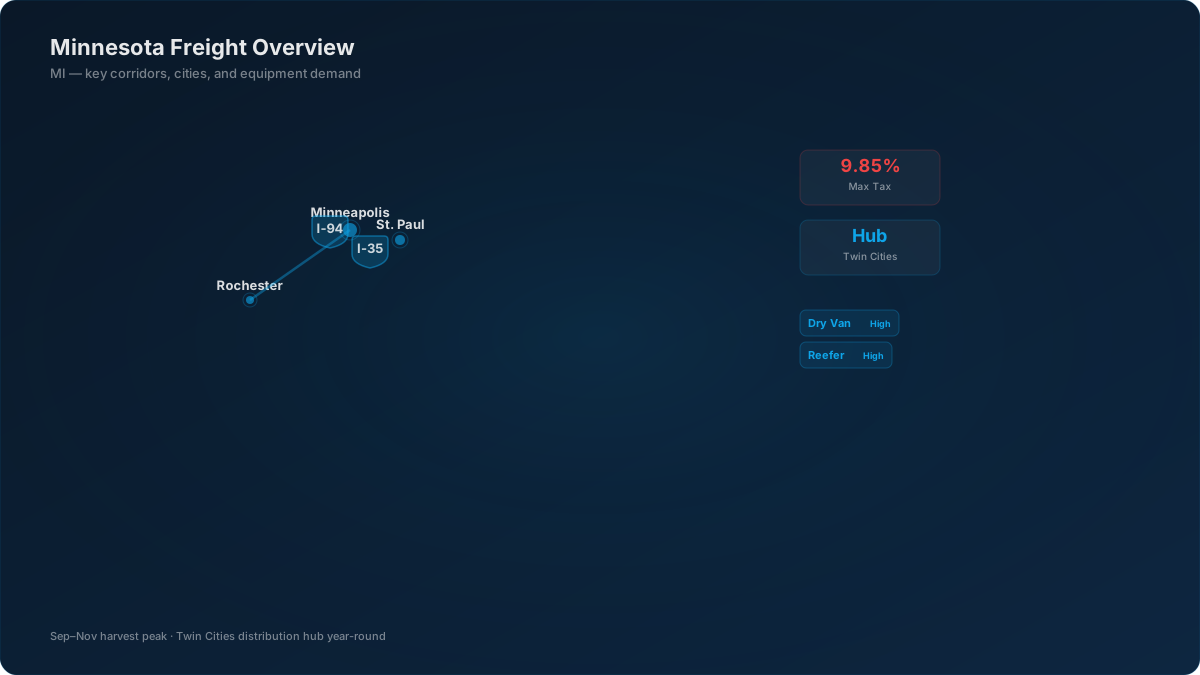
Major Freight Corridors
I-94 (Minneapolis → St. Cloud → Fargo)
Primary westbound corridor connecting the Twin Cities to the Dakotas. Agricultural freight (grain, sugar beets) moves east while consumer goods flow west. Heavy truck traffic year-round.
I-35 (Duluth → Minneapolis → Iowa)
North-south spine of Minnesota. Iron ore and timber move south from the Iron Range; consumer goods and food products flow north. Splits into I-35W (Minneapolis) and I-35E (St. Paul) in the metro.
I-90 (South Dakota → Rochester → Wisconsin)
Southern Minnesota east-west corridor connecting agricultural communities to Mayo Clinic in Rochester and Wisconsin markets. Grain elevators and ethanol plants line this route.
I-94 East (Minneapolis → Eau Claire → Milwaukee/Chicago)
Primary eastbound/southbound connector to Wisconsin and Chicago markets. Target and Best Buy distribution freight dominates this high-volume corridor.
Key Industries & Freight
Equipment Demand in Minnesota
Major Distribution Centers
- 📦Target — Brooklyn Park, Minneapolis HQ distribution complex supporting nationwide retail
- 📦Amazon — Shakopee, Lakeville, and multiple Twin Cities metro facilities
- 📦UPS/FedEx — Twin Cities hub operations serving Upper Midwest
- 📦General Mills — Golden Valley HQ, cereal and packaged food distribution
- 📦Duluth Port — iron ore pellets, grain, coal — Great Lakes shipping terminus
Minnesota Trucking Regulations
Winter Weight Restrictions
Minnesota allows increased weight limits during winter (10-ton roads become available when ground is frozen, typically Dec-March). Conversely, spring thaw restrictions (March-May) reduce weight limits significantly on county and township roads. Plan loads around seasonal weight changes.
Extreme Cold Operations
Minnesota winters regularly reach -20°F to -40°F. Diesel fuel gelling is a real risk below -10°F — use winter-blend fuel and fuel additives. Block heaters and APUs are essential. Reefer units maintaining heat (protecting loads from freezing) is the opposite of typical reefer use.
IFTA Fuel Tax
Minnesota fuel tax is $0.285/gallon — near the national average. No toll roads exist in Minnesota, which is a cost advantage for carriers operating throughout the state and Upper Midwest.
Cities We Cover
- Minneapolis
- St. Paul
- Rochester
- Duluth
- Bloomington
- Brooklyn Park
Plus all surrounding metros and rural areas
Run Freight in Minnesota?
Our Minnesota dispatchers know every lane, every rate, and every seasonal trend.
Regional Freight Guide
🏭Midwest & Great Lakes GuideTop lanes, seasonal patterns, deadhead traps, and regulations for IL, OH, IN, MI, WI, MN, IA, MO
Other Markets
Frequently Asked Questions
Minnesota's business-friendly environment and educated workforce attracted corporate headquarters over decades. Target, UnitedHealth, Best Buy, 3M, General Mills, Land O'Lakes, Hormel, US Bancorp, and others all call the Twin Cities home. For trucking, this means diverse corporate freight — retail distribution, packaged food, medical supplies, and consumer electronics all originate from Minneapolis-St. Paul.
Northern Minnesota's Mesabi Iron Range produces 80% of US iron ore. Iron ore pellets move by heavy haul truck to Duluth's port and rail terminals. Mining equipment, supplies, and support services also require truck transport. While concentrated in the northeast, Iron Range freight is high-value and commands premium rates due to remote locations and harsh winter conditions.
Top outbound lanes: Minneapolis to Chicago (I-94/I-90, 410mi), Minneapolis to Fargo (I-94, 235mi), Minneapolis to Des Moines (I-35, 245mi), Minneapolis to Milwaukee (I-94, 340mi), and Duluth to Chicago (I-35/I-90, 470mi). Target distribution creates the most consistent outbound dry van volume from the Twin Cities.
Minnesota winters are among the harshest in the Lower 48. Temperatures of -20°F to -40°F are common in January-February, causing diesel gelling, battery failure, and road closures. However, winter also brings opportunities: frozen ground allows heavier loads on rural roads, heating fuel demand spikes, and winter freight rates increase 10-20% to compensate for conditions.
Yes. Minnesota's combination of Fortune 500 corporate freight, agricultural production, Iron Range mining, and food processing creates a resilient year-round market. We dispatch all equipment types across the Twin Cities, Southern Minnesota grain belt, Iron Range, and Upper Midwest regional routes.
Get Dispatched in Minnesota
Our dispatchers know the Minnesota freight market inside and out. Tell us your equipment type and preferred lanes — we'll keep your truck loaded and profitable.