Why Owner-Operators Use Dispatch Services
Running your own truck means wearing every hat: driver, business owner, accountant, mechanic, and load planner. Professional dispatch takes the biggest time drain — finding and booking freight — off your plate so you can focus on what you do best: driving profitably.
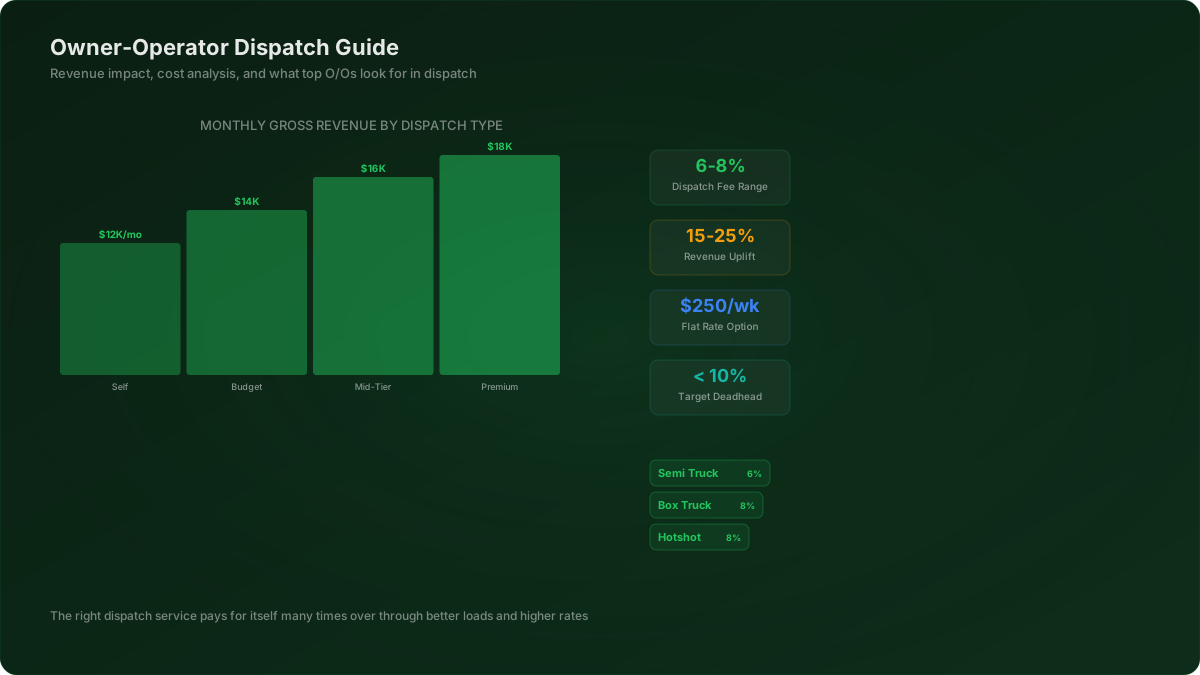
The highest-earning owner-operators in the industry almost universally use some form of dispatch support. They've done the math: the dispatch fee generates far more in additional revenue than it costs. A dispatcher who consistently finds loads paying $0.30-0.50 more per mile than you'd find yourself pays for themselves many times over.
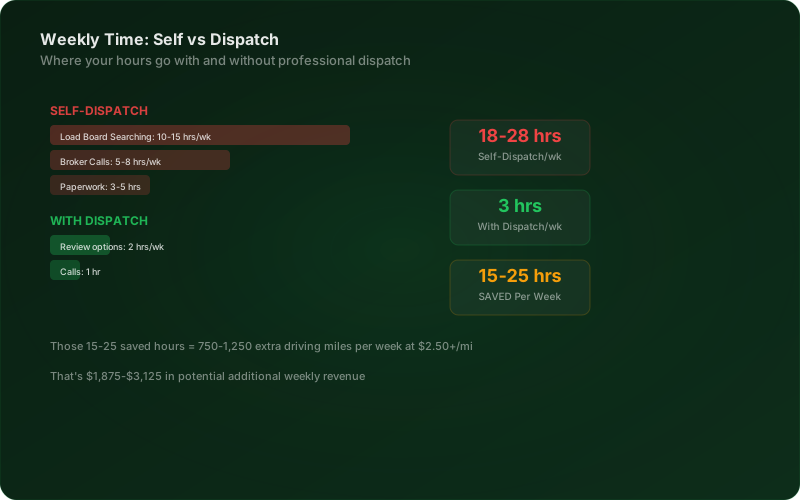
Beyond the financial math, there's the quality-of-life factor. Self-dispatching means 2-4 hours per day on load boards, phone calls, and paperwork — time that could be spent driving, resting, or with family.
What Dispatch Costs an Owner-Operator
Dispatch pricing in the trucking industry falls into two models:
Percentage-Based
4-8%
Of gross load revenue. This is the industry standard and what we recommend. Your dispatcher's incentive is aligned with yours — they earn more only when you earn more.
- ✓ Aligned incentives
- ✓ No payment when you're not running
- ✓ Scales with your revenue
Flat Fee
$50-200/wk
Fixed weekly or monthly fee regardless of revenue. Can be cheaper for high-revenue trucks but doesn't incentivize the dispatcher to find top-paying loads.
- ✓ Predictable cost
- ⚠ Pays even when parked
- ⚠ No rate incentive for dispatcher
At Truck Dispatch Experts, semi trucks pay 6% per load or $250/week flat rate, and box trucks & hotshot pay 8% per load or $350/week flat rate. No setup fees, no hidden charges, and no contracts. See our full pricing breakdown.
Benefits Beyond Load Finding
Many carriers think dispatch is just about finding loads. In reality, a good dispatcher impacts every aspect of your business:
Higher Revenue Per Mile
Professional negotiation consistently secures rates $0.30-0.50/mi above what most O/Os get themselves. On 10,000 monthly miles, that's $3,000-5,000 more per month.
Less Deadhead
Dispatchers plan your next load before you deliver your current one. This dramatically reduces empty miles — we target under 10% deadhead for all carriers.
Paperwork Handled
Rate confirmations, BOLs, PODs, invoicing — your dispatcher manages all documentation. That's 8-12 hours per week you get back.
Market Intelligence
Dispatchers see the entire freight market daily. They know which lanes are hot, when rates surge seasonally, and where to position your truck for maximum earning potential.
Broker Relationships
Established dispatchers have relationships with hundreds of brokers. These relationships mean first access to premium loads and faster payment terms.
Detention & Accessorial Pay
Many owner-operators don't collect detention pay or accessorial charges they're entitled to. Your dispatcher tracks these and bills for them.
Choosing the Right Dispatch Service
The dispatch industry has exploded in recent years, and not every company delivers on its promises. Here's what to evaluate:
- Equipment specialization — Does the dispatcher know your trailer type? A dry van dispatcher shouldn't be handling your flatbed.
- No long-term contracts — Any service confident in its quality won't lock you into a contract. If they need a contract to keep you, that's a red flag.
- Transparent pricing — You should know exactly what you're paying. Watch for "administrative fees," "technology fees," or other add-ons beyond the stated percentage.
- References from similar operators — Ask to speak with current carriers running similar equipment in similar regions.
- Communication style — Some dispatchers communicate primarily via app or text, others prefer phone. Find a match for your preference.
For a comprehensive framework, read our How to Choose a Dispatch Company guide.
Truck Dispatch Experts
Published Feb 10, 2025 · Updated Feb 1, 2026