Before You Start: Is Starting a Trucking Company Right for You?
Starting a trucking company is one of the most accessible paths to business ownership in America. But accessible doesn't mean easy. Before diving into the checklist, honestly assess these factors:
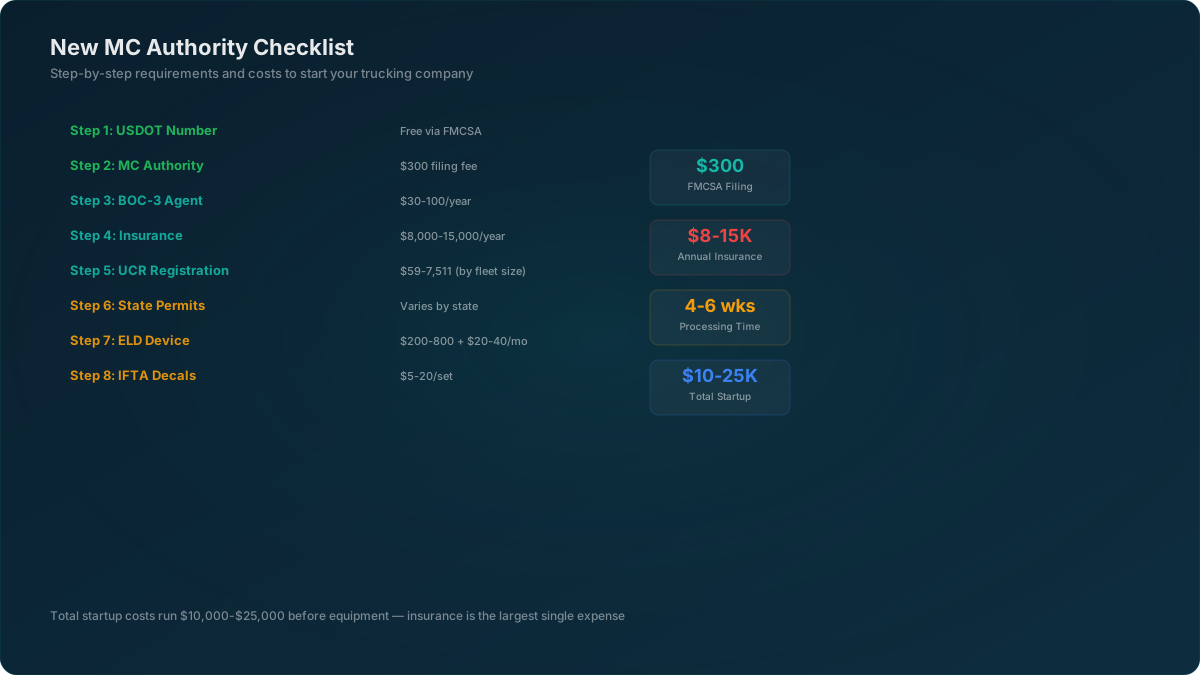
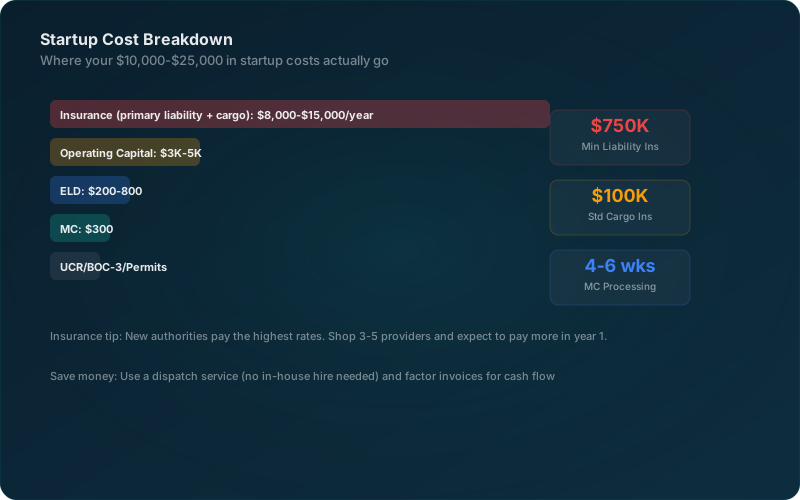
- Capital requirements — You'll need $10,000-25,000 minimum in startup costs beyond equipment
- Cash reserves — Plan for 3-6 months of operating expenses before revenue stabilizes
- CDL experience — Most insurance companies require 2+ years of CDL driving experience for new authorities
- Business skills — You're running a business, not just driving a truck. Bookkeeping, tax compliance, and customer relationships all matter
The Complete Checklist
Phase 1: Business Foundation
Form Your Business Entity
Register an LLC or corporation with your state. An LLC provides personal liability protection and is the most common structure for owner-operators. Cost: $50-500 depending on state.
Get an EIN (Employer Identification Number)
Apply free at IRS.gov. You'll need this for taxes, banking, and your FMCSA application. Takes 5 minutes online.
Open a Business Bank Account
Separate business and personal finances from day one. You'll need your EIN and business formation documents. Many trucking-friendly banks offer accounts with fuel card integration.
Create a Business Plan
Even a simple one: What equipment will you run? What lanes will you target? What are your monthly fixed costs? What's your minimum rate per mile? Use our Cost Per Mile Calculator to run the numbers.
Phase 2: FMCSA Registration
Apply for USDOT Number
Register through FMCSA's Unified Registration System (URS) at fmcsa.dot.gov. This identifies your company for safety and compliance purposes. Free with MC application.
Apply for MC Authority
Filed through the same URS portal. Choose 'Motor Carrier of Property' for hauling freight. Filing fee: $300. Processing takes 4-6 weeks.
Designate a BOC-3 Process Agent
Required by FMCSA. A BOC-3 agent is your legal representative in each state you operate. Services like National Permit Agency or Corporate Central offer BOC-3 filing for $30-100/year.
Wait for Authority Activation
After FMCSA grants your authority, there's a mandatory 10-day waiting period before you can operate. Use this time to secure insurance and set up your other systems.
Phase 3: Insurance & Compliance
Secure Primary Liability Insurance
Minimum $750,000 for general freight ($1M for hazmat). Shop at least 3-5 insurance agencies that specialize in trucking. New authority insurance is expensive ($8,000-15,000/year) but decreases with clean history.
Get Cargo Insurance
$100,000 minimum cargo coverage is standard. Most brokers require this before booking loads. Cost: $1,500-4,000/year depending on freight types.
File UCR (Unified Carrier Registration)
Annual registration required for interstate carriers. Fee: $59 for 0-2 vehicles. Register at ucr.gov before your authority activates.
Get IFTA License
Required for interstate fuel tax reporting. Apply through your base state's DOT or DMV. See our IFTA Filing Guide for details.
State Permits & Registrations
IRP (International Registration Plan) for apportioned plates, state-specific permits for oversize/overweight (if applicable), and HHG permits for household goods (if applicable).
Phase 4: Operations Setup
Equipment (Truck & Trailer)
Buy, lease, or finance your equipment. Ensure it passes DOT inspection before operating. Keep maintenance records from day one — FMCSA may audit new carriers within the first 18 months.
ELD (Electronic Logging Device)
Required for HOS (Hours of Service) compliance. Choose an FMCSA-registered ELD. Popular options: Motive (KeepTruckin), Samsara, Garmin. Cost: $20-50/month.
Load Boards or Dispatch Service
You need freight. Options: self-dispatch via load boards (DAT, Truckstop), hire a dispatch service, or a combination. New carriers especially benefit from professional dispatch — we know which brokers work with new authorities.
Factoring Company (Optional)
If you need faster payment than broker Net 30-90 terms, set up factoring before your first load. See our Freight Factoring Guide.
Accounting System
Set up QuickBooks, ATBS, or a trucking-specific accounting solution. Track every expense from day one. You'll need clean records for taxes, IFTA, and potential FMCSA audits.
Your First 30 Days with New Authority
The first month with new authority is critical. Here's what to focus on:
- Build your broker relationships — Start with established, reputable brokers. Check broker credit before booking (use services like DAT or Highway).
- Run your preferred lanes — Don't chase every load. Focus on lanes you know and build expertise there first.
- Track every expense — Fuel, maintenance, tolls, food, parking — everything. You need this data for taxes and to know your true cost per mile.
- Don't undercut rates — New authorities sometimes accept low rates to get started. This sets a bad precedent and barely covers costs. Know your cost per mile and don't book below it.
- Prepare for the new entrant audit — FMCSA may conduct a safety audit within your first 18 months. Keep your paperwork clean, maintenance logs current, and HOS compliant from the start.
Key Links & Resources
- FMCSA Registration (URS Portal) — Apply for your USDOT and MC authority
- UCR Registration — Unified Carrier Registration for interstate carriers
- IFTA Filing Guide — Step-by-step guide to quarterly fuel tax reporting
- Freight Factoring Guide — How to solve cash flow with invoice factoring
- Cost Per Mile Calculator — Know your numbers before booking your first load
Truck Dispatch Experts
Published Jun 8, 2025 · Updated Feb 1, 2026