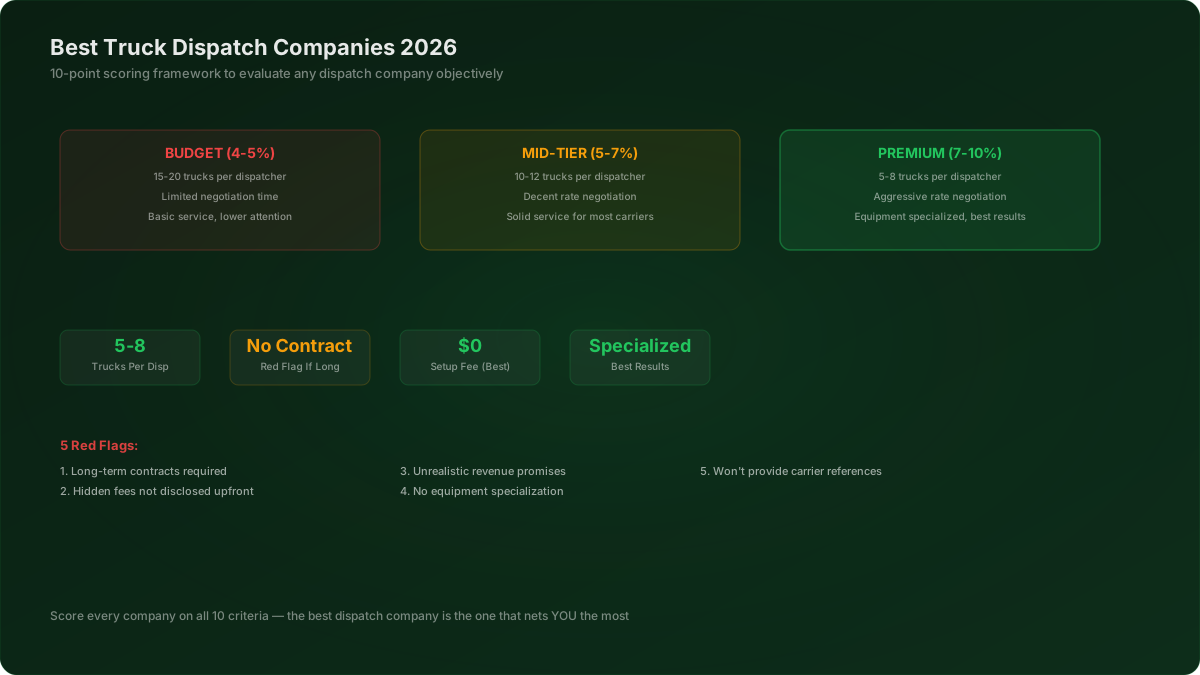
Why We Wrote This (Honestly)
Yes, we're a dispatch company writing about "the best dispatch companies." We know how that looks. But here's the thing: bad dispatch companies hurt the entire industry. When a carrier gets ripped off by a shady dispatcher, they don't just leave that company — they often decide ALL dispatch is a scam. That makes our job harder.
So rather than writing a fake "top 10 list" with us conveniently at #1, we're giving you a framework to evaluate ANY dispatch company — including us. Use these criteria, ask these questions, and you'll find the right fit for YOUR operation.
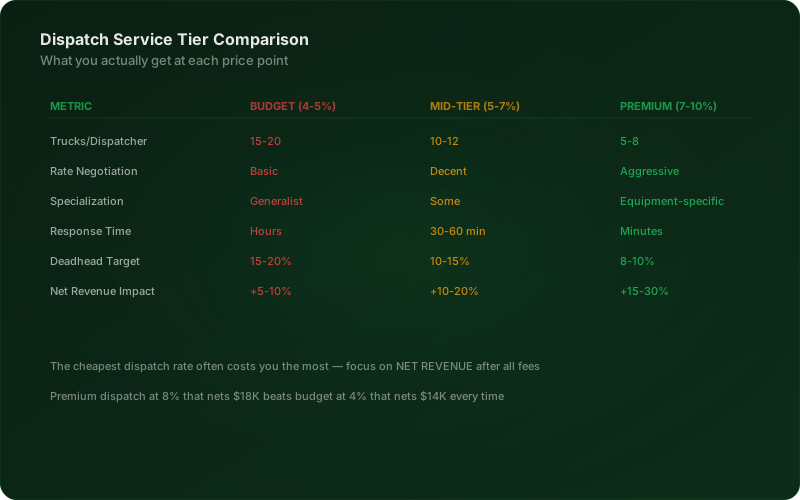
The 10-Point Dispatch Company Evaluation Framework
Score each company on these 10 criteria (1-10 scale). Any company scoring below 60/100 total is a risk. Below 50 is a hard pass.
Pricing Transparency
Can they give you a COMPLETE fee breakdown in writing?
Good Sign
One clear rate (percentage or flat), no hidden fees, written fee schedule provided upfront
Red Flag
Vague pricing, 'depends on the load,' fees only mentioned after signup, extra charges for standard services
Contract Terms
Are you locked in, or can you leave anytime?
Good Sign
No contract or short (30-day) cancellation notice, no termination fees, no penalties
Red Flag
6-12 month contracts, cancellation penalties, auto-renewal clauses, 90-day notice periods
Dispatcher-to-Truck Ratio
How many trucks does each dispatcher manage?
Good Sign
5-8 trucks per dispatcher with clear specialization by equipment type
Red Flag
15-20+ trucks per dispatcher, no specialization, 'we handle everything'
Equipment Specialization
Does the dispatcher specialize in YOUR trailer type?
Good Sign
Dedicated dispatchers by equipment type (reefer specialist, flatbed specialist, etc.)
Red Flag
One dispatcher handles all equipment types, no specialized market knowledge
Support Hours
When can you reach them if something goes wrong?
Good Sign
24/7 live support for active carriers, multiple contact methods, fast response times
Red Flag
Business hours only, voicemail after 5 PM, slow email responses, no weekend coverage
Carrier Control
Do you approve every load, or do they book without you?
Good Sign
You review and approve every load before booking, you set rate minimums and lane preferences
Red Flag
They book loads without approval, pressure you to accept loads you don't want, penalties for declining
Track Record
How long have they been operating? Can they provide references?
Good Sign
2+ years in business, willing to provide carrier references, verifiable reviews online
Red Flag
Brand new with no track record, no references, zero online presence, only positive reviews on their own site
Communication Quality
How was the initial sales call? Were they pushy or informative?
Good Sign
Answered questions directly, didn't pressure, explained their process, asked about YOUR needs
Red Flag
High-pressure sales, unrealistic promises ('guaranteed $10K/week'), avoiding direct questions, rushing to sign up
Technology & Reporting
How do they track loads, share updates, and report performance?
Good Sign
Clear load tracking, regular performance reports (revenue, deadhead, rate trends), accessible records
Red Flag
No tracking visibility, no performance reports, you have to ask for basic information
Billing & Payment
How and when do they collect their fee?
Good Sign
Clear billing cycle, transparent invoices showing each load's fee, works with your factoring company
Red Flag
Confusing invoices, deducting fees before you're paid, double-charging, surprise charges
15 Questions to Ask Every Dispatch Company
Copy these and ask them on your first call. A good dispatch company will answer every one without hesitation:
What is your COMPLETE fee structure? List every charge.
Is there a contract? What's the cancellation policy?
How many trucks does each dispatcher currently manage?
Do you have dispatchers who specialize in [my equipment type]?
Can I speak with 2-3 current carriers as references?
Do I approve every load before you book it?
What load boards and broker networks do you use?
What's your average rate per mile for [my equipment] in [my region]?
How do you handle after-hours emergencies?
How will you communicate with me? How often?
What happens if I'm not satisfied in the first month?
Do you work with my factoring company?
How do you handle detention and accessorial pay?
What's your typical deadhead percentage for [my equipment]?
How long have you been in business? How many active carriers?
What the Best Dispatch Companies Do Differently
After evaluating dozens of dispatch operations (including our own), these are the practices that separate the top tier:
They Say No to Bad Loads
Great dispatchers turn down loads that don't meet your rate floor or expose you to bad brokers. Mediocre dispatchers book anything to keep you moving and collect their fee.
They Think Multiple Loads Ahead
Instead of finding load A, they're already planning loads B and C. Where will you deliver? What's available for the backhaul? This lane thinking minimizes deadhead and maximizes weekly revenue.
They Specialize Deeply
Top dispatchers know their equipment type intimately — seasonal patterns, regional hotspots, specific brokers who pay well for that trailer type. Generalists can't match this depth.
They Communicate Proactively
You shouldn't have to call for updates. The best dispatchers call YOU with options, market conditions, and next-load plans before your current load delivers.
They Invest in Relationships
The best loads don't come from load boards — they come from broker relationships built over years. Top dispatch companies maintain hundreds of direct broker contacts and get loads before they're posted publicly.
They Track and Share Data
They can tell you your average rate per mile, deadhead percentage, and revenue trend over any period. They use this data to improve performance month over month, not just load by load.
Types of Dispatch Companies
Not all dispatch services operate the same way. Understanding the different models helps you find the right fit:
Full-Service Dispatch
5-8%End-to-end: load finding, rate negotiation, paperwork, broker setup, billing coordination, 24/7 support. One fee covers everything. Best for most carriers.
Best for: Owner-operators, small fleets
Load-Finding Only
3-5%They find loads and negotiate rates, but you handle paperwork and broker communication yourself. Lower fee but more work on your end.
Best for: Experienced carriers who want help finding loads but prefer handling admin
Fleet Dispatch Operations
4-7% (volume discount)Designed for fleets of 5+ trucks. Dedicated account manager, fleet-wide optimization, driver coordination, and comprehensive reporting.
Best for: Fleet owners with 5-20 trucks
Niche/Specialized Dispatch
6-10%Focus on one equipment type (reefer only, flatbed only, heavy haul only). Deep market expertise in that specific niche.
Best for: Carriers running specialized equipment
Where Truck Dispatch Experts Fits
Since you're on our site, you probably want to know how we stack up against our own framework. Here's the honest version:
Related Resources
- How to Choose a Dispatch Company — Our original 10-point evaluation guide
- Truck Dispatch Rates 2026 — Complete pricing guide for dispatch services
- Is Dispatch Worth It? — ROI analysis with real numbers
- Double Brokering Protection — How to protect yourself from freight fraud
- Get Started with TDE — Free consultation, no commitment
Truck Dispatch Experts
Published Jan 15, 2026 · Updated Mar 1, 2026