Southeast & Gulf Freight Guide
Agricultural heartland meets distribution mega-hub — Florida produce, Port of Savannah, Atlanta logistics, and automotive manufacturing.
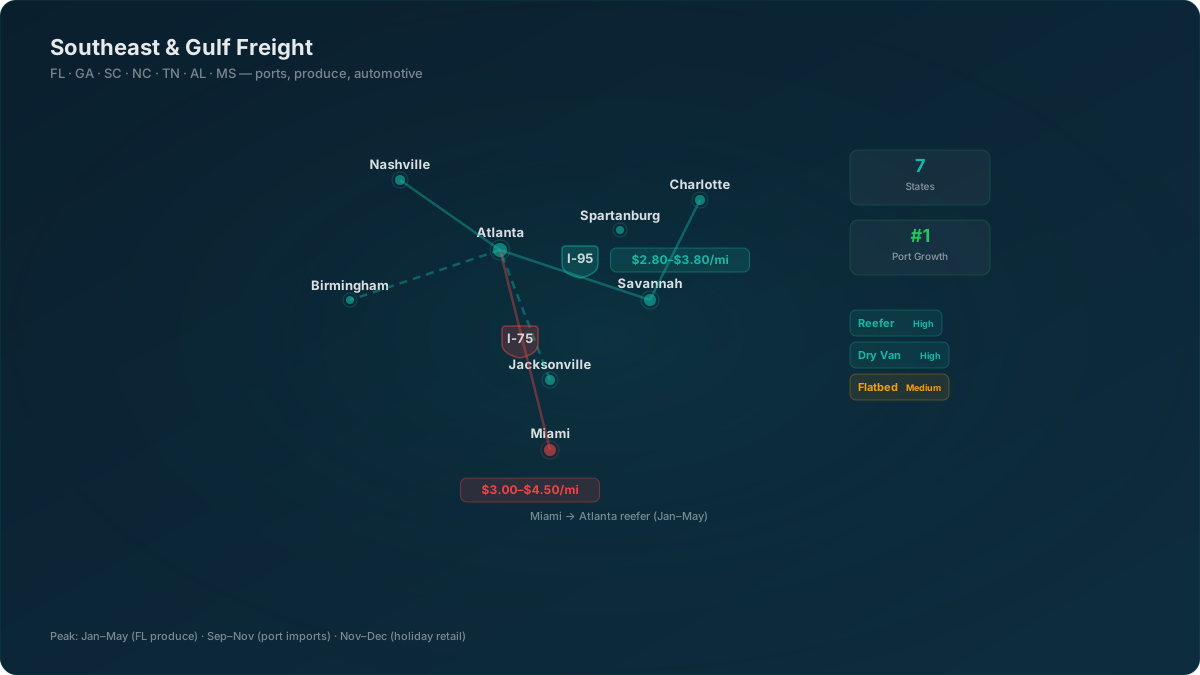
From Florida's year-round produce to Georgia's distribution mega-hub, the Southeast is where agricultural freight, port drayage, and automotive manufacturing converge. The produce calendar alone drives massive seasonal reefer demand from January through July.
Top Freight Lanes
Miami, FL → Atlanta, GA (I-75)
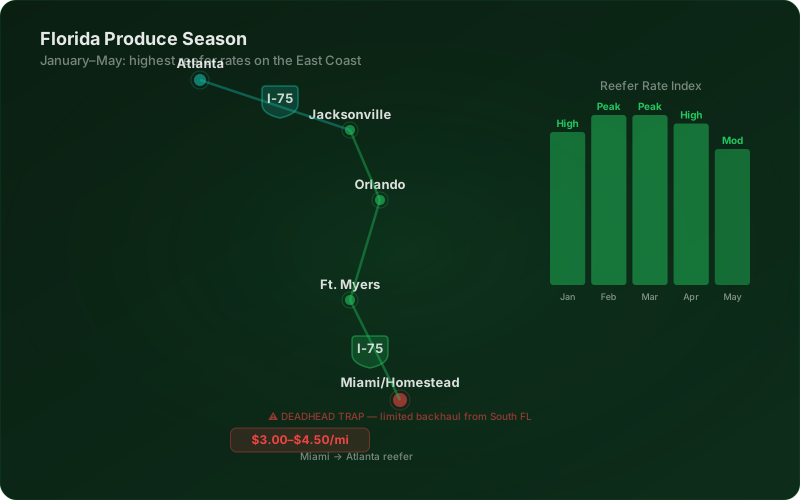
$3.00–$4.50/miFlorida produce season drives premium reefer rates northbound. Southbound can be tough — deadhead risk without retail backhaul.
Savannah, GA → Charlotte, NC (I-85/I-77)
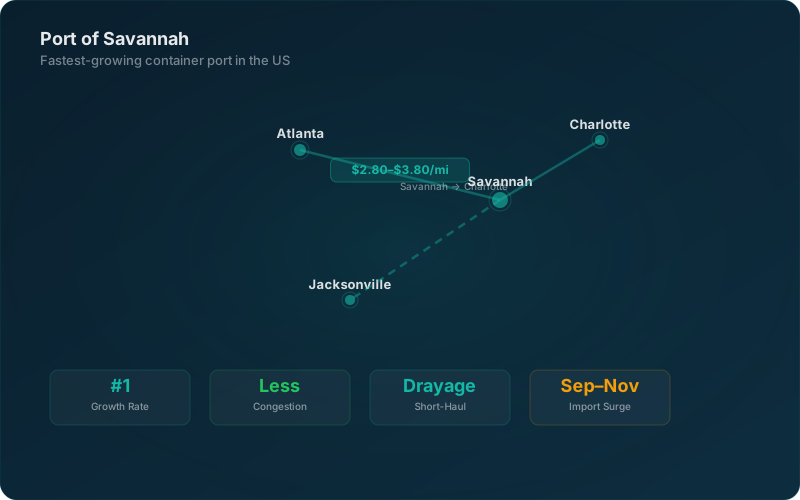
$2.80–$3.80/miPort of Savannah containerized imports feeding Charlotte distribution. Consistent volume, moderate rate competition.
Atlanta, GA → Nashville, TN (I-24)
$2.50–$3.50/miTwo massive distribution hubs connected. Amazon, Walmart, and major retailers have DCs in both cities.
Jacksonville, FL → Atlanta, GA (I-95/I-16)
$2.80–$4.00/miPort freight from JAXPORT plus Florida produce heading to Atlanta's distribution network.
Spartanburg, SC → Charleston, SC (I-26)
$3.00–$4.50/miBMW and Volvo manufacturing outbound meets Charleston port imports inbound. Short lane but high rates.
Seasonal Freight Calendar
Deadhead Traps to Avoid
⚠️South Florida (Miami / Homestead)
The trap: The classic trucker trap. Produce season (Jan–May) has strong northbound loads, but outside produce season, Miami is a freight desert. Trucks run 200–300 miles empty to find loads in Orlando or Jacksonville.
How to avoid it: During off-season (Jun–Dec), avoid positioning in South Florida unless you have a confirmed outbound load. During produce season, maximize by running multiple short-haul loads to consolidation points before heading north.
⚠️Rural Mississippi / Alabama
The trap: Low population density = low freight density. Once you leave the I-20 (Meridian–Birmingham) or I-65 (Mobile–Montgomery) corridors, load options thin dramatically.
How to avoid it: Stay on major corridors. If delivering to rural MS/AL, negotiate the inbound rate high enough to cover 100–150 miles of deadhead to I-20 or I-65 where loads cluster.
⚠️Coastal Carolina (Myrtle Beach / Outer Banks)
The trap: Tourist destinations with seasonal freight. Outside summer, these areas have minimal outbound. Hotels and restaurants need inbound goods but generate almost no outbound freight.
How to avoid it: Treat coastal deliveries as premium lanes — charge accordingly for the inbound because the outbound deadhead is nearly guaranteed. During summer, some construction and seasonal supply loads appear.
Equipment Demand
State Regulations Comparison
| State | Max Weight | Tolls | State Tax | Permits |
|---|---|---|---|---|
| Florida | 80,000 lbs | Yes (Turnpike, Sunpass) | No income tax | FDOT oversize |
| Georgia | 80,000 lbs | Yes (Peach Pass) | Income tax (1–5.49%) | GDOT oversized |
| South Carolina | 80,000 lbs | Minimal | Income tax (0–6.4%) | SCDOT oversized |
| North Carolina | 80,000 lbs | Yes (NC Turnpike) | Income tax (4.5%) | NCDOT oversize |
| Tennessee | 80,000 lbs | No toll roads | No income tax | TDOT oversized |
| Alabama | 80,000 lbs | Minimal | Income tax (2–5%) | ALDOT oversize |
| Mississippi | 80,000 lbs | No toll roads | Income tax (0–5%) | MDOT oversized |
Region at a Glance
Run This Region?
Our dispatchers specialize in Southeast & Gulf freight — every lane, every season, every rate.
Route Planning Tools
Frequently Asked Questions
Florida produce season runs roughly January through May. The biggest months are February through April, when tomatoes, peppers, strawberries, and citrus ship in massive volumes from Homestead, Plant City, Immokalee, and the central Florida growing regions. Reefer rates can spike 30–50% above average during peak weeks.
Atlanta sits at the intersection of I-75, I-85, I-20, and I-285 — connecting the entire Southeast. It has the second-highest concentration of distribution centers in the US (behind only Chicago). Amazon, Walmart, Home Depot (HQ), UPS (HQ), and dozens of major retailers run massive DC operations in metro Atlanta.
The Port of Savannah is the fastest-growing container port in the US and now handles the third-highest volume nationally. For truckers, this means consistent drayage and inland freight — containers need to be moved from the port to distribution centers across the Southeast, often to Atlanta (250 miles), Charlotte (270 miles), or Nashville (470 miles).
The safest strategy is timing your Florida runs with produce season (Jan–May) when northbound reefer loads are plentiful. Off-season, avoid positioning south of Orlando unless you have a confirmed outbound load. If you must go to Miami, look for port loads from PortMiami or book a relay load to Jacksonville or Orlando.
The Southeast is America's auto manufacturing belt. BMW (Spartanburg, SC), Volvo (Charleston, SC), Nissan (Smyrna, TN), Mercedes (Vance, AL), Hyundai (Montgomery, AL), and VW (Chattanooga, TN) all have major assembly plants. Inbound parts on flatbed/step deck and outbound vehicles on car haulers create year-round freight.
Get Dispatched in the Southeast & Gulf
Our dispatchers know the Southeast & Gulf freight market — every lane, every season, every rate. Tell us your equipment and preferred corridors.