Mountain & Plains Freight Guide
Energy freight meets open highway — Bakken oil, wind turbines, Front Range growth, and agricultural freight across America's wide-open spaces.
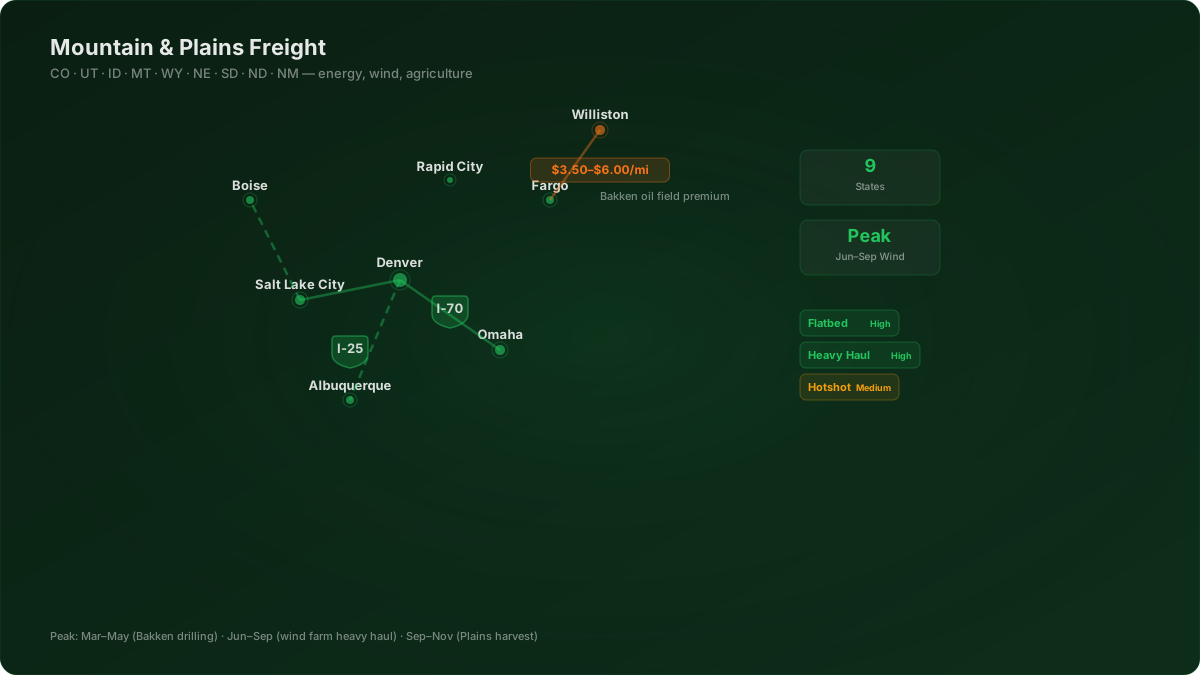
Energy freight (oil, gas, wind turbines), long empty stretches, and altitude challenges define this region. The Bakken formation in North Dakota, Colorado's Front Range growth, and Utah's Salt Lake City crossroads create pockets of high-value freight amid vast distances.
Top Freight Lanes
Denver, CO → Salt Lake City, UT (I-70/I-15)
$2.80–$4.00/miTwo growing mountain metros connected. I-70 through Eisenhower Tunnel has chain restrictions and seasonal closures. Plan alternative routes in winter.
Williston, ND → Fargo, ND (US-2/I-94)
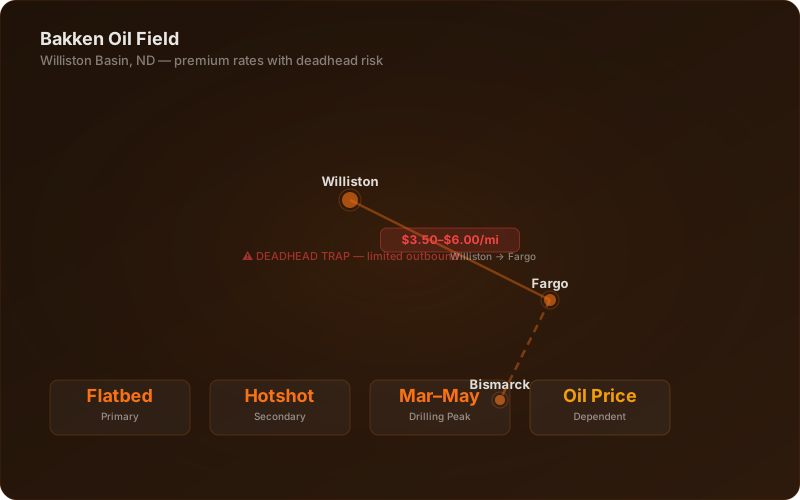
$3.50–$6.00/miBakken oil field freight — pipe, equipment, chemicals. Premium rates but extreme weather and long deadhead after delivery.
Denver, CO → Dallas, TX (I-25/I-35)
$2.50–$3.50/miFront Range distribution to Texas markets. Beer, outdoor gear, tech equipment southbound; consumer goods northbound.
Omaha, NE → Chicago, IL (I-80)
$2.50–$3.50/miBeef processing (Omaha #1 in US) feeds Chicago and eastern markets. Harvest season adds grain movement.
Boise, ID → Salt Lake City, UT (I-84/I-15)
$2.50–$3.50/miIdaho agriculture (potatoes, dairy) plus growing Boise tech sector. Mountain passes require winter preparation.
Seasonal Freight Calendar
Deadhead Traps to Avoid
⚠️Western North Dakota / Eastern Montana
The trap: Oil fields generate premium inbound rates, but once you deliver to a well site, you're 200–400+ miles from any outbound load cluster. The nearest consistent freight is in Fargo (350 miles) or Billings (300 miles).
How to avoid it: Only run Bakken loads as part of a planned circuit: pick up in Minneapolis/Fargo, deliver to Williston area, then immediately reposition to Billings or back to Fargo. Never park in western ND waiting for loads.
⚠️Wyoming (outside I-80 corridor)
The trap: Wyoming has the lowest population of any US state (580K). Outside the I-80 corridor (Cheyenne–Rock Springs), freight essentially doesn't exist. Deliveries to Casper, Sheridan, or Yellowstone area mean 200+ miles empty.
How to avoid it: Stay on I-80 through Wyoming — it's a major east-west freight corridor with loads between SLC, Denver, and Cheyenne. Only go off I-80 for premium energy loads that cover round-trip deadhead.
⚠️Rural New Mexico (outside I-40/I-25)
The trap: Vast distances between population centers. Deliveries to southern NM (Las Cruces, Alamogordo) or northwestern NM leave you far from any freight cluster.
How to avoid it: Stay near I-40 (Albuquerque corridor) or I-25 (Las Cruces–Albuquerque–Santa Fe). Cross-border freight from El Paso/Juárez can provide southbound loads. Avoid accepting loads to NM towns more than 50 miles from major interstates.
Equipment Demand
State Regulations Comparison
| State | Max Weight | Tolls | State Tax | Permits |
|---|---|---|---|---|
| Colorado | 80,000 lbs | Yes (E-470, I-25 Express) | Income tax (4.4%) | CDOT oversize + chain law |
| Utah | 80,000 lbs | No toll roads | Income tax (4.65%) | UDOT oversize |
| Idaho | 105,500 lbs (with permit) | No toll roads | Income tax (1–5.8%) | ITD oversize |
| Montana | 80,000 lbs | No toll roads | Income tax (4.7–5.9%) | MDT oversize |
| Wyoming | 80,000 lbs | No toll roads | No income tax | WYDOT oversize |
| Nebraska | 80,000 lbs | No toll roads | Income tax (2.46–5.84%) | NDOT oversize |
| South Dakota | 80,000 lbs | No toll roads | No income tax | SDDOT oversize |
| North Dakota | 105,500 lbs (with permit) | No toll roads | Income tax (1.95–2.5%) | NDDOT oversize |
| New Mexico | 86,400 lbs (grandfathered routes) | No toll roads | Income tax (1.7–5.9%) | NMDOT oversize + weight-distance tax |
Region at a Glance
Run This Region?
Our dispatchers specialize in Mountain & Plains freight — every lane, every season, every rate.
Route Planning Tools
Frequently Asked Questions
Yes, but it's cyclical. When crude oil prices are above $65–70/barrel, drilling activity picks up and flatbed/hotshot rates can exceed $5–6/mile for time-critical oilfield freight. The challenge is the deadhead — western North Dakota is 300+ miles from any major freight cluster. Successful Bakken carriers run planned circuits: load in Fargo or Minneapolis, deliver to the oil fields, then immediately reposition rather than waiting for outbound loads.
Altitude, weather, and distance. Mountain passes like Eisenhower Tunnel (CO), Snoqualmie (WA), and Donner (CA/NV) have chain restrictions, seasonal closures, and steep grades that affect transit times and fuel consumption. Winter storms can shut down I-80 in Wyoming, I-70 in Colorado, and I-90 in Montana for hours or days. Plan extra time and carry chains October through April.
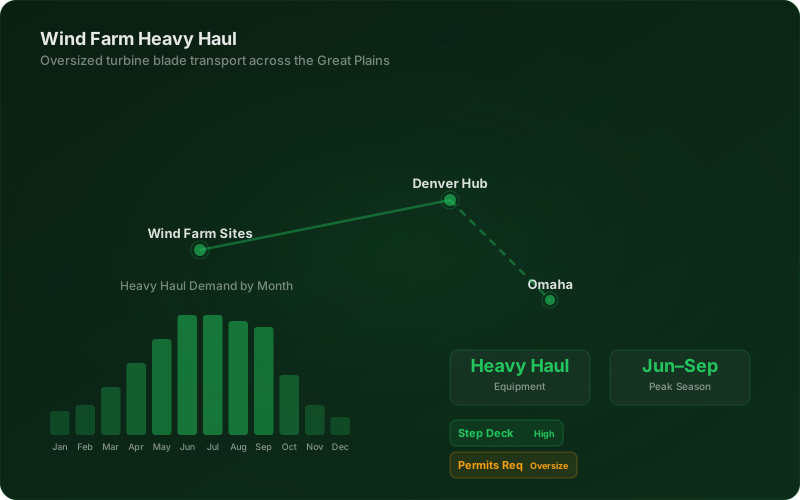
Wind energy is a massive freight category across the Plains. Kansas, Iowa, Nebraska, South Dakota, North Dakota, and Texas are the top wind energy states. Turbine components — blades (200+ feet), nacelles (200,000+ lbs), tower sections — require heavy haul and specialized oversized transport. Construction season runs June through November, and new projects are announced annually.
Both cities are growing rapidly and generate consistent year-round freight. Denver is a top-15 US metro with strong retail, construction, and beer/beverage distribution. SLC sits at the I-15/I-80 crossroads and serves as the distribution hub for the entire Mountain West. Both cities have Amazon and major retailer DCs that create steady dry van and reefer demand.
Yes. We dispatch all equipment types across Colorado, Utah, Idaho, Montana, Wyoming, Nebraska, South Dakota, North Dakota, and New Mexico. Our dispatchers understand mountain pass routing, energy freight logistics, agricultural timing, and the unique challenges of long-haul runs across sparsely populated areas.
Get Dispatched in the Mountain & Plains
Our dispatchers know the Mountain & Plains freight market — every lane, every season, every rate. Tell us your equipment and preferred corridors.